
Most deposit fights don’t start with a hole in the wall. They start on move day, when nobody booked the elevator, the truck couldn’t get past the gate, and a dresser got dragged down the hallway because time was running out. Our crews have worked as apartment movers in San Antonio for a long time, and the same handful of mistakes shows up at almost every month-end. This apartment move-out checklist is the one we’d hand a friend. It covers what to book, what to clean, what to photograph, and when it makes sense to pay someone else to carry the couch.
If you’re reading this in late October, you’re probably looking at an October 31 or November 30 lease end. Both work fine. You just need to start a little earlier than feels necessary.
Start 30 days out: read the lease and give notice
Pull up your lease before you do anything else. You’re looking for three things:
- How much notice you owe. Many leases require 30 days’ written notice as a condition of getting your deposit back. If you’re moving out November 30, that notice is due right about now.
- What the move-out expectations are. Some complexes hand out a cleaning checklist, require receipts for professional carpet cleaning, or charge a flat move-out fee. Ask the leasing office for their list so you’re not guessing.
- Any building rules for moving. Allowed hours, elevator reservations, where trucks can park. More on that below.
It also helps to know the basics of Texas law. According to theTexas Attorney General’s renter’s rights page, your landlord has 30 days to return your deposit, minus any deductions, and has to give you an itemized list if they keep any of it. You have to give them a forwarding address to get it. They also can’t charge you for normal wear and tear, only for actual damage. Carpet that’s a little worn from a year of walking on it is wear and tear. A torn carpet from dragging a bookcase across it is damage.
That last part is the whole game. Most of what you can control on move day is the difference between wear and tear and damage.
Book the elevator, the dock, and the parking before you book movers
If you live in a mid-rise, a downtown high-rise, or one of the loft buildings around the Pearl or Southtown, the elevator decides your schedule. Plenty of buildings make you reserve the freight elevator in advance, sometimes weeks ahead, and some restrict moving to certain hours. A few ask for a refundable deposit to hold the elevator or protect the common areas.
Here’s the order that saves the most headaches:
- Call the leasing office and get your elevator or loading dock window in writing.
- Ask whether the building wants a certificate of insurance from your mover, and who it should be made out to. A lot of larger complexes require one. We send ours routinely.
- Ask where a moving truck is allowed to park and for how long. Downtown buildings often have time-limited loading zones.
- Then book your movers for that window.
Do the same thing at your new place. A perfect move-out doesn’t help much if the truck sits outside your new building for an hour because the elevator there is booked by someone else.
When you call us, tell us the window. If it’s tight, we’ll send a bigger crew so the truck is loaded before your time runs out.
Gate codes, parking, and the walk to the truck
A lot of San Antonio complexes are gated, and gates cause more delays than people expect. Before move day:
- Get the gate code, or ask the office how a moving truck gets in. Some gates have separate vendor codes.
- If you’re moving on a Sunday, sort this out by Friday. Many leasing offices keep short weekend hours, and there may be nobody around to open a stuck gate.
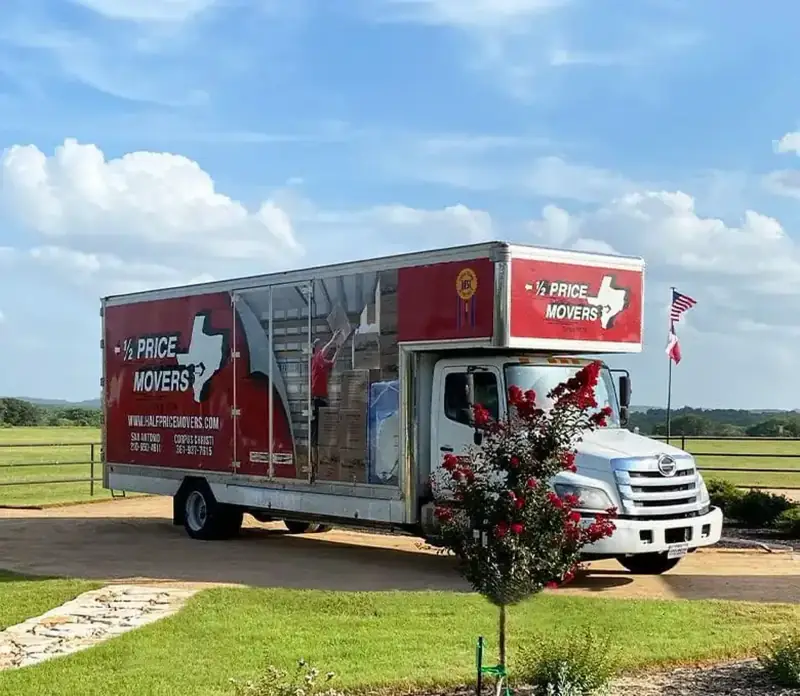
- Ask whether a box truck can make the turns around the buildings. Tight drives, carports, and fire lanes all limit where a truck can sit.
- Reserve the closest spot you can to your stairwell or breezeway. Put a couple of cones or a car there the night before if your complex allows it.
The distance from your door to the truck matters more than almost anything else on a local move. Every extra flight of stairs and every long walk across a parking lot adds time, and on local moves, time is what you pay for.
Protect the apartment while you move out
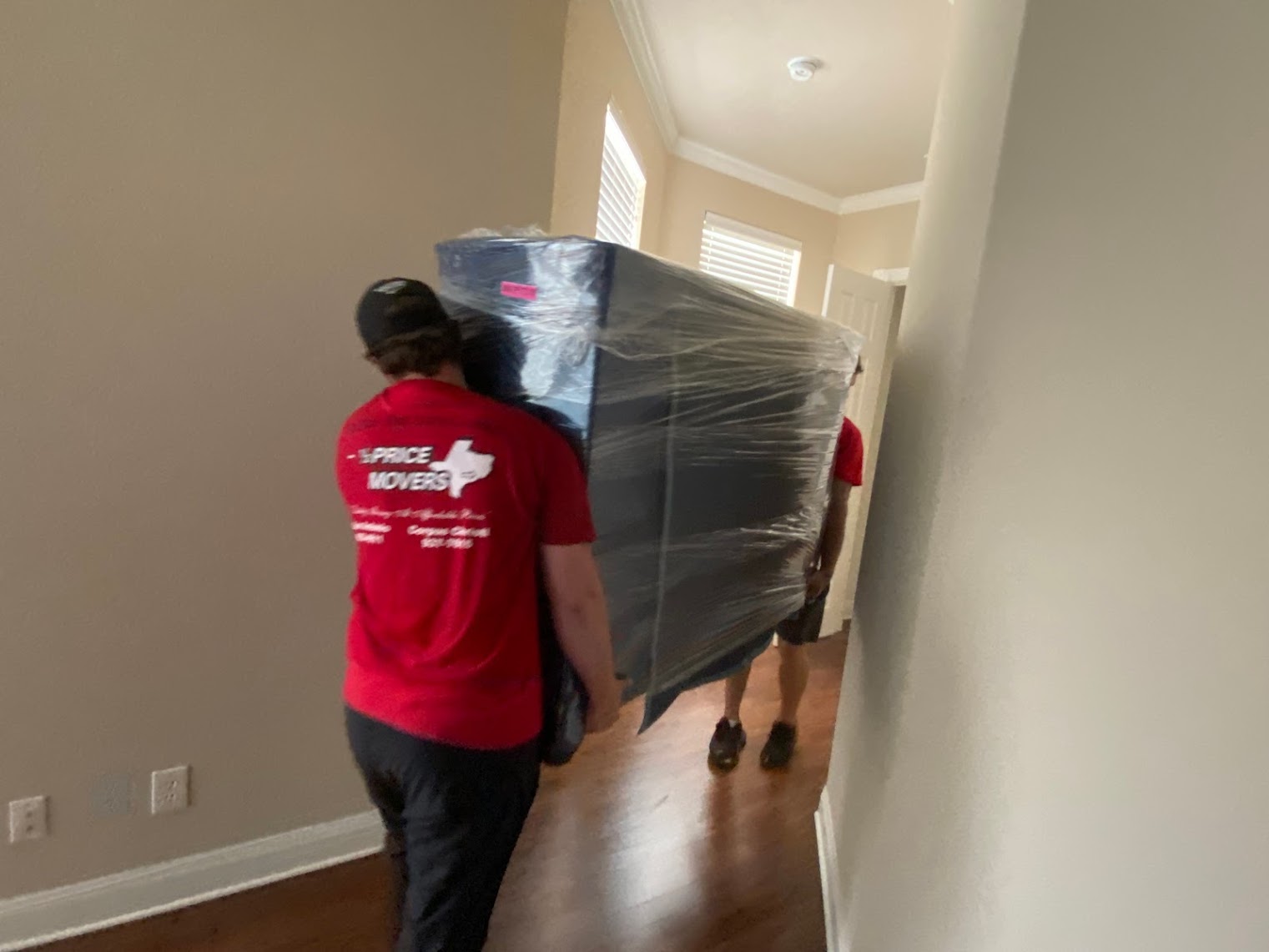
The fastest way to lose part of a deposit is damage done on the way out. Scraped door frames, gouged walls in narrow halls, and torn carpet near the entry are the usual suspects.
A few simple habits help:
- Take down TVs and wall mounts yourself a day early, and patch the holes the way your lease asks. Some complexes would rather patch nail holes themselves than deal with a bad DIY job, so check first.
- Never drag furniture. Lift it or put it on a dolly.
- Wrap anything with sharp corners. Our crews show up with furniture pads, shrink wrap, mattress bags, and dollies on every apartment job, so you don’t have to buy any of that.
- Break down bed frames, desks, and tables ahead of time if you can. Fewer big pieces means fewer chances to hit a wall.
The move-out walkthrough
Once the apartment is empty, it’s time to get it ready for inspection. This is where an hour of effort pays for itself.
Clean the spots inspectors always check. Inside the oven and the fridge, behind and under appliances if you can safely pull them out, bathroom grout and tub, baseboards, blinds, ceiling fans, and the inside of cabinets.
Handle the small stuff. Replace burned-out bulbs. Leave smoke detectors connected and working. Take everything out of the closets, the patio, and any storage closet attached to the unit.
Take photos and video. Walk every room with your phone after you finish cleaning. Open the oven, the fridge, and the cabinets on camera. Compare it to your move-in inspection form if you still have it, and point out anything that was already there when you moved in.
Ask to be there for the walkthrough. Not every complex allows it, but it’s worth asking. If they do, get a signed copy of the results.
Return everything and get a receipt. Keys, fobs, mailbox keys, garage or gate remotes, parking stickers if they want them back. Write down who you handed them to and when.
Give your forwarding address in writing. Email works, but keep a copy. Without it, the 30-day clock doesn’t really help you.
Labor-only or full-service for an apartment?
This is the question we get most from renters, and the honest answer depends on whether you want to drive the truck.
Full-service means we bring the truck, the crew, and the equipment. We load, drive, and unload. It’s the easy choice for most apartment moves inside the city, especially if your complex has a tight gate or a loading zone with a time limit.
Labor-only means you rent the truck and drive it, and our crew handles the lifting, loading, and unloading. It makes sense if you already have a rental truck, a friend with a truck, or you’re driving yourself somewhere and only need loading help. You can read more about it on ourlabor-only movers page.
For planning, here’s what recent local moves have cost, straight from ourpricing page:
- Room or less: $300 to $500
- 1 bedroom apartment: $400 to $650
- 2 bedroom apartment: $500 to $825
Those ranges include both full-service and labor-only moves. Local moves have a minimum charge of $355 for full-service and $195 for labor-only, and that minimum covers travel, stretch wrap, and fuel. Packing is estimated separately. If you’d like help with just the kitchen and fragile stuff, ourpacking services in San Antonio can do a partial pack.
Want more detail on what moves the price up or down? Our1-bedroom apartment move cost guide walks through it for smaller units, andhow much movers cost in San Antonio covers everything else.
A note on late October and November move-outs
Fall is a good time to move here. You’re outside the summer rush, when demand and prices run highest, and a third-floor walk-up is a lot more pleasant in November than in July.
Two dates do fill up fast, though. October 31 lands on a Saturday this year, and month-end weekends are always the first slots to go. Thanksgiving week is the other one. Leasing offices often close or cut hours over the holiday, so if you’re out by November 30, schedule your walkthrough and key drop before Thanksgiving if you can.
Your quick move-out checklist
- Give written notice the way your lease requires
- Ask the office for their move-out cleaning list and any fees
- Reserve the elevator or loading dock at both buildings, in writing
- Ask whether the building needs a certificate of insurance from your mover
- Get gate codes and confirm where the truck can park
- Book your movers for your reserved window
- Take down wall mounts and patch holes per your lease
- Pack, label, and stage boxes near the door the night before
- Clean the oven, fridge, bathrooms, baseboards, and blinds
- Photograph and video every room after cleaning
- Return all keys and remotes and get a receipt
- Send your forwarding address in writing
When you’re ready, ourapartment movers in San Antonio can take the lifting off your plate. Tell us your floor, your elevator window, and your gate situation, andget a free estimate online. Or call the San Antonio office at (210) 796-6471.
Frequently asked questions
How much do apartment movers in San Antonio cost?
Based on recent local moves, a 1 bedroom apartment usually runs $400 to $650 and a 2 bedroom runs $500 to $825. A room or less is $300 to $500. Stairs, elevators, long walks to the truck, and distance between apartments all affect where you land in that range.
Will you send a certificate of insurance to my apartment complex?
Yes. Many complexes require one before a moving crew can work on the property. Ask your leasing office who the certificate should be made out to, then pass that along when you book.
Can you work around an elevator reservation or loading zone?
Yes. Tell us the exact window when you book. If it's tight, we'll size the crew so the truck gets loaded before your reservation ends.
How long does my landlord have to return my deposit in Texas?
The Texas Attorney General says landlords have 30 days to return the deposit, minus any deductions, and must itemize anything they keep. You have to give them a forwarding address in writing.
Can my landlord charge me for normal wear and tear?
No. Under Texas law, landlords can only charge for actual damage, not normal wear and tear. That's why it's worth protecting floors, walls, and door frames on move day.
Should I pick labor-only or full-service for my apartment?
Pick full-service if you don't want to rent and drive a truck. Pick labor-only if you already have the truck and just need strong, careful help loading and unloading it. Labor-only has a lower minimum.
Is Half Price Movers licensed?
Yes. Half Price Movers is licensed with the Texas Department of Motor Vehicles, TxDMV NO. 006080743C, and insured. We've been moving Texas families since 1979.
How far ahead should I book an apartment move?
Two to four weeks is usually enough. Book earlier for month-end weekends and holiday weeks, since those dates fill first.