
Changing your address is the part of moving everyone puts off, and it is the part with actual legal deadlines attached. Texas gives you a limited window to update your driver license, and separate processes handle your vehicle registration, your mail, and your voter registration. Miss one and you risk fines, misdirected mail, or showing up to vote at the wrong polling place. This guide walks you through every address change a Texas move requires, in the order that makes the most sense.
At Half Price Movers, we have helped Texas families move since 1979, and this is the checklist we wish everyone had.
Start Here: The Four Updates That Matter Most
Most people think "change of address" means one form. It is actually four separate systems that do not talk to each other.
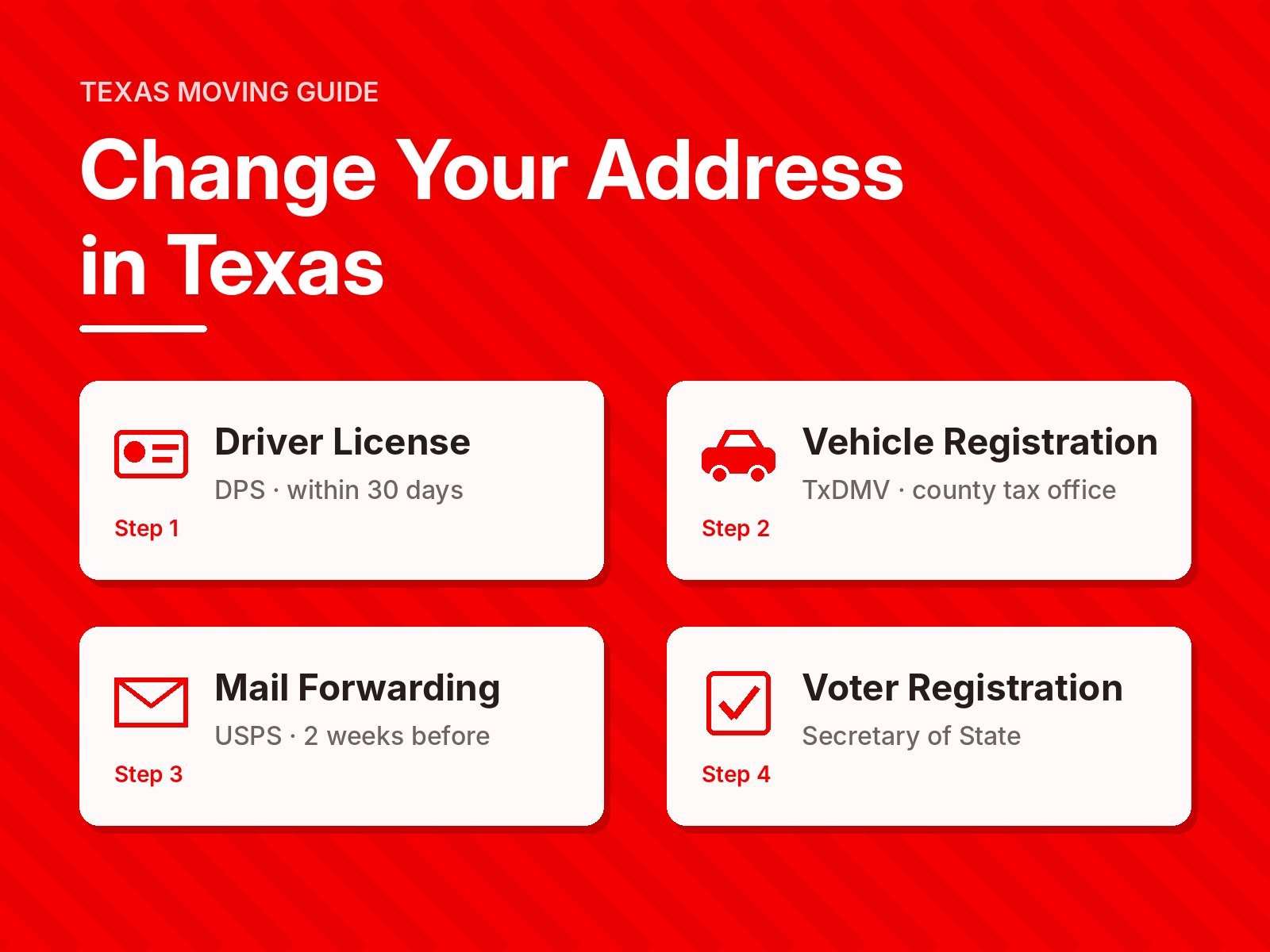
- Texas driver license or ID through DPS
- Vehicle registration and title through TxDMV
- Mail forwarding through USPS
- Voter registration through the Secretary of State
Updating one does not update the others. Filing with USPS does not change your license. Changing your license does not update your voter record. Each one is its own task.
1. Texas Driver License or ID Address Change
This is the one with a hard legal deadline, so handle it first.
The 30-Day Rule
Texas requires you to change the address on your driver license or ID card within 30 days of moving to your new residence. This applies whether you moved across town in San Antonio or across the state.
How to Do It
DPS offers three ways to request a replacement license with your new address:
- Online, which is fastest if you qualify
- By mail, using the appropriate DPS form
- In person at a driver license office
Online eligibility typically requires a current, non-expired, non-commercial Texas license, your Social Security number on file, and that you are not making other changes (like a name change) that require in-person verification.
Start at the Texas Department of Public Safety driver license section to check your eligibility and begin.
If You Miss the Window
Missing the 30 days can mean a late fee, and an address mismatch can cause problems with insurance claims and traffic stops. It is a small task with disproportionate consequences, so do it early.
Moving to Texas From Another State
The rules are different if you are new to Texas. New residents generally have 90 days to obtain a Texas driver license. Note that DPS will typically ask for proof of Texas vehicle registration when you apply, so most new residents handle the vehicle first.
2. Vehicle Registration and Title
Changing your license address does not update your vehicle registration. This is a separate record handled by a different agency.
Who Handles It
Vehicle registration and title records are handled by the Texas Department of Motor Vehicles (TxDMV) and processed through your county tax assessor-collector office. If you moved counties, that means a new county office.
How to Do It
TxDMV offers an online change of address system, and you can also handle it in person at your county tax office.
Check current requirements and deadlines directly at TxDMV, since registration rules differ depending on whether you are an existing Texas resident moving within the state or a new resident registering a vehicle here for the first time.
New Texas Residents
If you moved to Texas from another state, you generally have 30 days to register your vehicle here. That process typically involves a vehicle inspection, proof of insurance, your out-of-state title, and an application form at the county tax office.
3. USPS Mail Forwarding
This one is simple, and it buys you a safety net for everything you forget.
How It Works
USPS mail forwarding redirects mail from your old address to your new one. It is not a permanent fix, but it catches the bills, statements, and letters from senders you did not think to update.
When to File
Submit your change of address with USPS about two weeks before your move so forwarding starts on time.
Important Limitation
USPS forwarding does not update your address with any agency or business. It only redirects mail. Treat it as a backstop, not a substitute for the other updates on this list.
4. Voter Registration
If you moved, your voter registration needs updating, and this is the one people most often skip.
Why It Matters
Your voter registration determines your precinct and polling location. If you moved within the same county and do not update it, your record may be out of date. If you moved to a new county, you need to register in that county.
How to Do It
Texas offers an online name and address change portal through the Secretary of State. You will typically need your driver license or ID number, your Social Security number, and your Voter Unique Identifier (VUID) from your voter registration card.
Start at VoteTexas.gov to update your record.
It Is Separate From DPS
Changing your address with DPS does not automatically notify the Secretary of State. Handle voter registration as its own task.
Everything Else on Your Address Change List
Beyond the four government updates, work through these. For the rest of your move planning, see our moving checklist for Texas residents.
Financial
- Banks and credit unions
- Credit card companies
- Investment and retirement accounts
- Loan servicers
- Tax preparer
Insurance
- Auto insurance (your rate may change by address)
- Homeowners or renters insurance
- Health insurance
- Life insurance
Utilities and Services
- Electricity, water, gas
- Internet and cable
- Trash and recycling
- Lawn or pool service
Employment and Benefits
- Employer HR and payroll
- Social Security Administration, if applicable
- Veterans Affairs, if applicable
- Retirement or pension accounts
Healthcare
- Primary care physician
- Dentist and specialists
- Pharmacy
- Veterinarian
Subscriptions and Memberships
- Streaming and delivery services
- Gym memberships
- Magazines and subscription boxes
- Online retailers with saved addresses
A Sensible Order of Operations
Doing these in the right sequence saves backtracking.
Two Weeks Before Your Move
File your USPS change of address so forwarding begins on schedule. Notify utilities and schedule connections at the new address.
The Week You Move
Update your employer, banks, and insurance providers. These affect paychecks, statements, and coverage.
Within One Week After Moving
Handle your driver license address change through DPS. Update your voter registration through the Secretary of State portal.
Within 30 Days After Moving
Confirm your driver license update is complete and verify your vehicle registration records with TxDMV or your county tax office. Update property tax records with the county appraisal district if you bought a home.
Where Half Price Movers Fits In
We cannot file your DPS paperwork, but we can take the physical move off your plate so you have the bandwidth to handle it. Half Price Movers is family-owned, fully licensed and insured in Texas, and has served San Antonio and Corpus Christi since 1979.
We offer full-service moves, fragile-only packing, and labor-only crews, so you can match the service to your budget. See what is included on our services overview page and our residential moving services page, or check coverage on the areas we serve page.
Ready to Take the Move Itself Off Your List?
Address changes are tedious but manageable. The move itself is the hard part, and that is where we come in. Handle your DPS update within 30 days, file with USPS two weeks out, and update your voter registration and vehicle records as soon as you are settled. We will handle the trucks and the heavy lifting.
You can request your free quote online anytime.
Ready to make your move? Half Price Movers has been serving Texas families since 1979. Call (210) 796-6471 (San Antonio) or (361) 338-4187 (Corpus Christi), or get your free quote at halfpricemovers.com.
Frequently Asked Questions
How long do I have to change my address on my Texas driver license?
Texas requires you to update the address on your driver license or ID card within 30 days of moving to your new residence. You can usually do it online if your license is current and non-commercial, or handle it by mail or in person at a DPS office.
Does filing a USPS change of address update my driver license?
No. USPS mail forwarding only redirects your mail. It does not update your driver license, vehicle registration, voter registration, or any account. Each of those is a separate update you have to make yourself.
Does changing my license address update my vehicle registration?
No. Your driver license and your vehicle records are handled by different agencies. DPS handles licenses; TxDMV and your county tax assessor-collector office handle vehicle registration and title. Update both.
Do I need to update my voter registration if I moved within the same county?
Yes. Your voter registration determines your precinct and polling location, so it should reflect where you actually live. Texas offers an online portal through the Secretary of State for name and address changes.
What if I just moved to Texas from another state?
The deadlines differ for new residents. You generally have 30 days to register your vehicle in Texas and 90 days to obtain a Texas driver license. DPS typically asks for proof of Texas vehicle registration when you apply, so most people handle the vehicle first.
When should I file my USPS change of address?
About two weeks before your move, so forwarding starts on time without a gap. Filing too early can redirect mail before you have left.
What happens if I miss the 30-day deadline?
You may owe a late fee, and an address that does not match where you live can create problems during traffic stops and with insurance claims. It is worth handling early rather than cutting it close.
Are Half Price Movers licensed and insured?
Yes. We are fully licensed and insured in Texas, and our credentials can be verified through the Texas Department of Motor Vehicles. We are happy to provide our license number and certificate of insurance on request.