
A piano is not just heavy. It is awkward, off-balance, and built around hundreds of delicate internal parts that can be permanently damaged by a single bad lift. That is why professional piano movers San Antonio TX families trust are not just regular movers with extra muscle. Piano moving is a specialty, and at Half Price Movers, it is one we have built into our service offering for over 40 years. If you have searched "piano moving near me San Antonio," this guide will walk you through exactly why this is one job to leave to the pros, and what to expect when you hire us to handle it.
Why Pianos Are One of the Most Dangerous Items to Move
Most people underestimate pianos until they try to move one. Then reality hits.
Weight That Surprises Everyone
An average upright piano weighs between 300 and 500 pounds. A baby grand starts around 500 pounds and climbs from there. A full concert grand can exceed 1,200 pounds. That is a lot of weight, and it is not distributed evenly.
Top-Heavy and Off-Balance
Pianos carry most of their weight in the upper portion of the cabinet, especially uprights. Tilt one a few degrees too far and gravity takes over fast. Once a piano starts going down, two people usually cannot stop it.
Fragile Where It Matters
A piano looks solid, but the soundboard, hammers, strings, and action are all precision components. A sharp jolt can crack a soundboard. A drop can knock the action out of alignment. Even small bumps can throw a piano badly out of tune.
This combination of heavy, top-heavy, and fragile is exactly why pianos hurt people every year. Trained piano movers know how to manage all three at once, and that is the core of what we do on every piano job in San Antonio.
Upright vs. Baby Grand vs. Grand
Not every piano moves the same way. The type of piano determines the equipment, the crew size, and the technique.
Upright Pianos
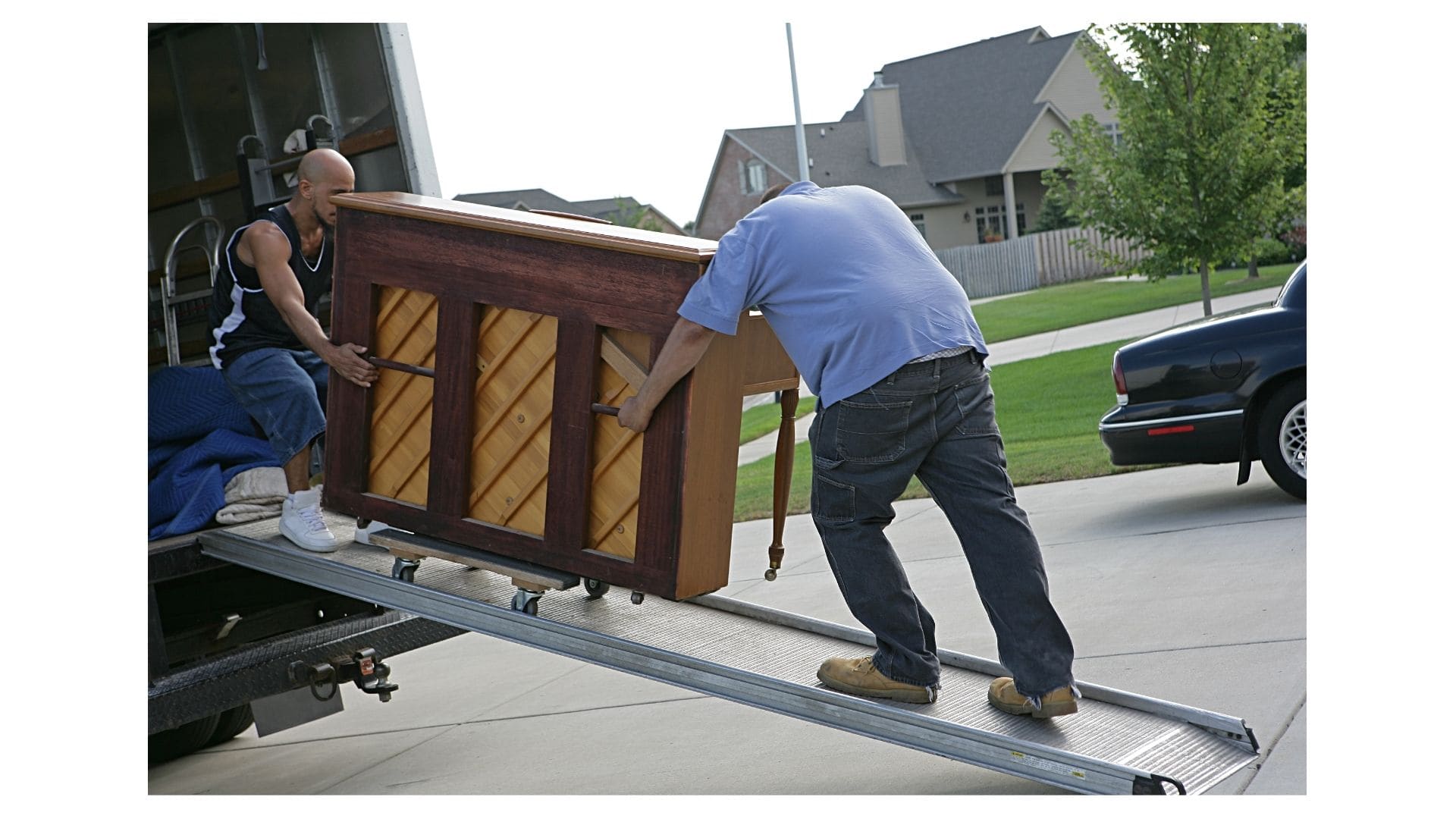
Uprights are the most common piano in San Antonio homes. They look smaller than grands, but they are deceptively heavy and very top-heavy. Our crew uses heavy-duty straps, a piano dolly, and four-point lifts to keep the piano stable and the weight balanced across the team.
Baby Grand Pianos
Baby grands are moved differently than uprights. The legs, lyre, and pedal assembly come off. The piano body is then laid on its side on a piano board (also called a skid board), wrapped in heavy padding, and strapped tight. From there, it is rolled to the truck on a piano dolly. Reassembly happens at the new home in reverse order.
Grand and Concert Grand Pianos
Grands are larger, heavier, and require even more crew and equipment. The process is similar to a baby grand, but the increased size means tighter clearances, more padding, and often a four-person crew. These pianos may also need a piano-specific ramp for loading into the truck.
If you are unsure what type of piano you own, send a few photos when you request your quote. We will walk you through the right approach.
The Equipment You Will Not Find at a Rental Truck Counter
This is where DIY piano moves usually fall apart. The right gear is not optional, and most of it is not available at a typical rental truck location.
A professional piano move uses:
- Piano boards (skid boards) sized for grand pianos
- Heavy-duty piano dollies rated for 800 pounds or more
- Four-inch nylon moving straps with quick-release buckles
- Extra-thick moving pads designed for piano cabinets
- Stretch wrap to secure padding in place
- Piano-specific loading ramps for trucks without lift gates
- Floor protection to prevent damage at both homes
- Door jamb and corner protectors for tight spots
Renting a truck and a regular furniture dolly is not the same setup. A standard furniture dolly is not rated for piano weight and is the wrong shape for proper balance. This is one of the most common reasons DIY piano moves end with damaged pianos, damaged homes, or injured people.
For more on why specialty equipment and training matter, the Piano Technicians Guild explains the importance of professional piano moving in detail on their main site.
How Half Price Movers Plans a Piano Move
A successful piano move is 80 percent planning and 20 percent muscle. Before we ever touch your piano, we do the homework.
Step 1: Measure Every Access Point
Doorways, hallways, stairwells, and turns all get measured at both homes. We compare those measurements against your piano's dimensions to identify any tight spots before moving day. San Antonio's older neighborhoods like Alamo Heights and Monte Vista often have narrower hallways and tighter staircases, which makes this step especially important.
Step 2: Map the Route
We plan the exact route the piano will travel inside both homes. This includes identifying where furniture needs to be cleared, where floor protection needs to go down, and where extra padding is needed at corners.
Step 3: Confirm Crew Size and Equipment
Based on the piano type, weight, and access challenges, we decide how many movers will be on the job and what equipment they will bring. A simple upright on the ground floor may need two movers. A baby grand going up a flight of stairs in Stone Oak may need three or four.
Step 4: Coordinate Timing
Piano moves often happen as part of a larger residential move, but they can also be standalone jobs. Either way, we schedule the right amount of time so the crew is never rushed.
You can learn more about how we plan and execute every type of move on our services overview page and our residential moving in San Antonio page.
The Real Risks of DIY Piano Moving
If you are still thinking about doing it yourself or asking a few friends to help, here is what is actually at stake.
Back, Knee, and Hand Injuries
Pianos cause some of the most serious injuries in DIY moves. Crushed fingers, herniated discs, and torn ligaments are common. The National Academy of Sports Medicine outlines safe lifting and moving techniques for a reason. Even with proper form, the weight and balance of a piano are beyond what most people can safely handle.
Floor and Wall Damage
A piano that slips off a dolly can crack tile, dent hardwood, gouge drywall, or punch through stair risers. Repair costs often exceed what professional movers would have charged in the first place.
Staircase Accidents
Stairs are where most amateur piano moves go wrong. The combination of weight, gravity, and limited control space turns a small mistake into a serious accident in seconds.
Tuning and Internal Damage
Even a piano that arrives at the new home "looking fine" can have hidden damage. Cracked soundboards, broken hammers, and out-of-alignment actions often only show up later when the piano is played or tuned. Professional repairs can run into the thousands.
In other words, the money you save trying to move a piano yourself often costs you more in the end. This is one job where professional help is the budget-friendly option.
How Piano Moving Is Priced in San Antonio
A professional piano move is priced based on the specifics of the job, not a one-size-fits-all rate. The main factors that affect the cost include:
- Piano type: Upright, baby grand, grand, or concert grand
- Weight and size of the specific instrument
- Distance: Local move within San Antonio, longer move to a surrounding city, or interstate
- Access: Stairs, narrow doorways, elevators, long carries from the truck to the door
- Floor level: Ground floor vs. second story
- Crew size required to safely handle the piano
- Add-on services like packing for other items, storage, or piano placement at the destination
We give every San Antonio homeowner a free, personalized quote so there are no surprises. Request your free quote online or call our office to talk through your specific piano move.
What to Do Before the Piano Movers Arrive
A little prep on your end makes the move faster and safer. Here is how to be ready when our crew shows up.
Clear the Path
Move furniture, rugs, and any obstacles out of the way along the entire route the piano will travel. This includes both homes, the driveway, and any porches or walkways.
Protect Floors If You Want To
Our crew brings floor protection, but if you want to lay down extra protection on hardwood or carpet, that is welcome. Cardboard sheets, painter's tape, or moving blankets all work well.
Secure Pets and Kids
Piano moving requires focus and clear sightlines for the crew. Keeping pets and small children in another room or outside during the move keeps everyone safe.
Decide on Destination Placement
Know exactly where you want the piano at the new home. Decide which wall, which room, and which angle before the crew arrives. Pianos should ideally be placed against an interior wall, away from windows, vents, and direct sunlight.
Confirm Access at Both Locations
Reserve parking close to the entrance at both homes. If you live in an apartment or condo, reserve the elevator and notify building management about the move time.
Ready to Move Your San Antonio Piano Safely?
A piano is often the most valuable, sentimental, and irreplaceable item in your home. It deserves a crew that knows how to handle it. Half Price Movers has been moving San Antonio pianos for over 40 years, with the equipment, training, and care every piano deserves. Whether you have an heirloom upright, a baby grand, or a full concert grand, we are ready to help.
You can also explore our full range of specialty and residential moving services or check our San Antonio service area page to confirm we cover your neighborhood.
Ready to make your move? Call (210) 796-6471 (San Antonio) or (361) 338-4187 (Corpus Christi), or get your free quote.
Frequently Asked Questions
How much does it cost to move a piano in San Antonio?
Piano moving costs depend on the type of piano, the distance, the access at both homes (stairs, narrow doorways, elevators), and whether the piano move is part of a larger residential move. The most accurate way to know your cost is to request a free, personalized quote based on your specific piano and move details.
Can Half Price Movers move just my piano, or do I need to book a full move?
Both options are available. We handle standalone piano moves as well as piano moves that are part of a larger home or office relocation. If you only need a piano moved across town, across San Antonio, or to a nearby city, that is fine.
Do I need to have my piano tuned after a move?
Yes. Pianos typically need to be tuned after any move because temperature, humidity, and even small vibrations from transport can affect the tuning. Most piano technicians recommend waiting two to four weeks after the move before tuning, so the piano can settle into its new environment.
What types of pianos do you move?
We handle upright pianos, console pianos, spinets, baby grands, grand pianos, and concert grand pianos. If you have an antique or unusually large piano, send a few photos with your quote request so we can plan properly.
Can you move a piano up or down stairs?
Yes. Stairs are one of the most common challenges in piano moving, and our crews are trained and equipped to handle them. We measure stairwells in advance and bring the right crew size and equipment for safe handling.
Are Half Price Movers licensed and insured?
Yes. We are fully licensed and insured in Texas, and our credentials can be verified through the Texas Department of Motor Vehicles. We are happy to share our license number and certificate of insurance on request.
How far in advance should I book a piano move?
Two to four weeks of lead time is ideal, especially during peak moving season from May through August. Standalone piano moves can sometimes be scheduled with less notice depending on crew availability.
Do you move pianos outside of San Antonio?
Yes. We move pianos throughout the San Antonio metro area, including Alamo Heights, Boerne, Universal City, Leon Valley, New Braunfels, and Canyon Lake, as well as to Corpus Christi and other Texas destinations.